Saturday, April 21, 2012

Tea, beaches, and monkeys

I traveled to Sri Lanka for a week and a half this month during my spring break, and it was a wonderful time. I'm unfortunately kind of busy right now getting ready for a trip to Jordan this coming week, so I don't have time to do a post that does Sri Lanka justice.

In short, though, it's a fascinating place full of pristine beaches and beautiful mountains, gorgeous tea plantations and ubiquitous monkeys, delicious food and really nice people. The food is spicier than India's, and as visitors we didn't see much rampant poverty like that which is so commonly associated with India -- not to say it doesn't exist. The people are still recovering from the tsunami in 2004, which killed tens of thousands and leveled coastal communities, as well as the effects of the country's civil war, which lasted over 25 years and only ended three years ago.

I hope these photos can convey how beautiful and interesting Sri Lanka is:

The city of Kandy, in the hills in the center of the country

Women at the Kandy's Temple of the Tooth, which is said to contain Buddha's tooth

Giant Buddha 

Chiller

Buddhas in caves

The ubiquitous rice and curry

Sigiriya, the site of an ancient rock fortress 

Sri Lanka's colorful (and ancient) transportation

Mmm... cream soda

A farm in the beach town of Nilaveli

A civil war-era bunker on an empty beach in Nilaveli


Ruins from the tsunami in Nilaveli

Picking onions in Nilaveli

Tharini, the daughter of the awesome family that ran our guesthouse in Nilaveli, attacks a coconut

Muslim boys in Trincomalee, a coastal city that was the scene of fighting
and ethnic tension just a few years ago

Hindu ceremony in Trinco

More spice than you could possibly imagine

Pinnawala Elephant Orphanage

Bathing in a nearby river

Third class on a train into the Hill Country
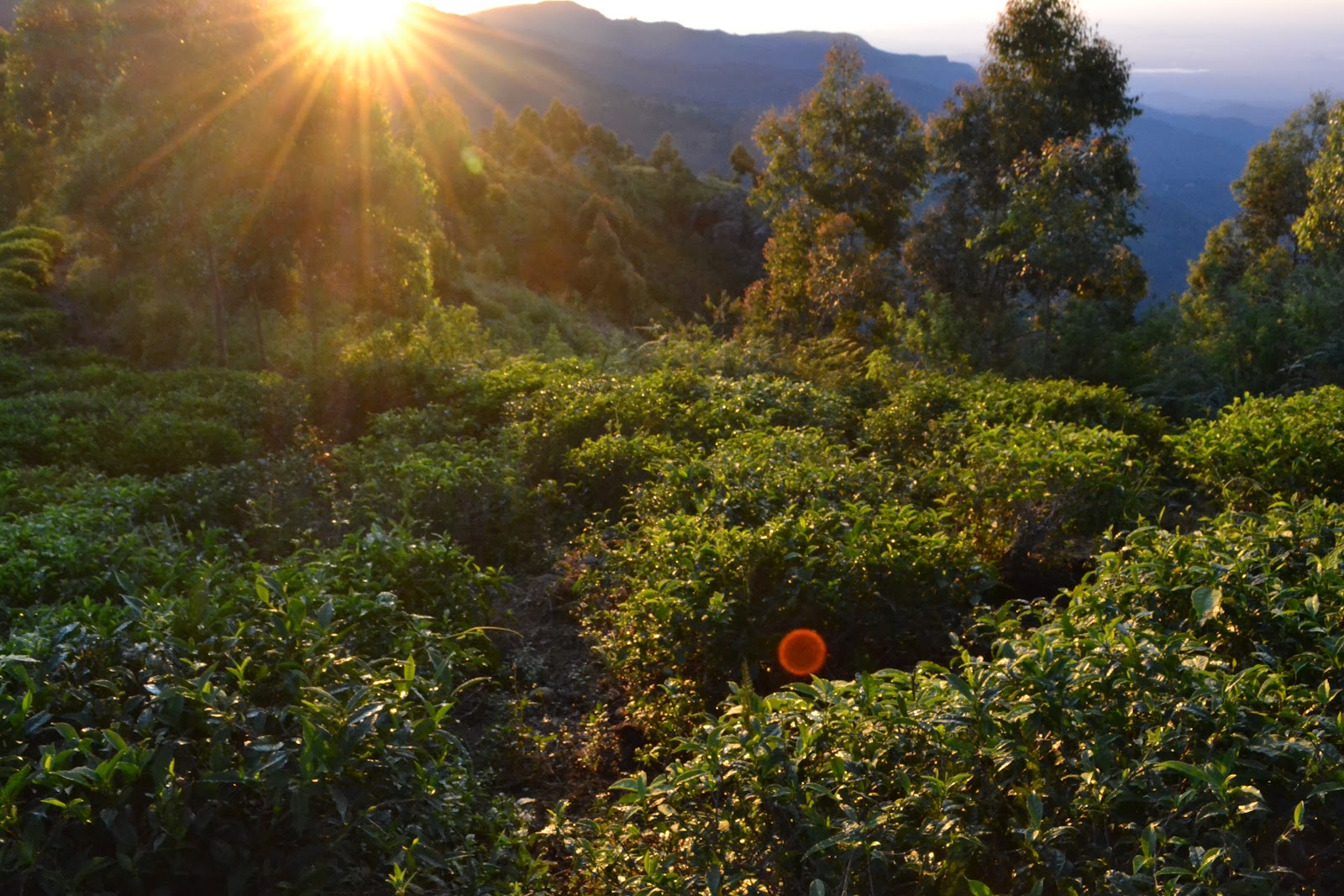
 Sunrise in Haputale, in Sri Lanka's Hill Country

Hello.

Farina, one of our hosts in Haputale, with her delicious breakfast

19th century-era, British railway system


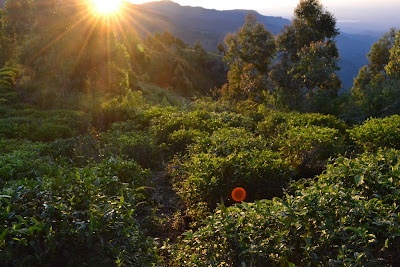
Tea fields at sunrise

The view from Lipton's Seat, where Sir Thomas Lipton, founder of the Lipton
tea empire, used to come and ponder life's greatest questions

Tea. Lots of tea.

Monday, April 2, 2012

Parkour, cattle, and Islamists

It's been a crazy news week here in Cairo. The Muslim Brotherhood announced on Saturday -- after lots of speculation and closed-door negotiations -- that it would field a candidate for the presidential race, throwing the election into disarray and upending previous electoral predictions.

Meanwhile, foot-and-mouth disease has been ravishing the Egyptian countryside over the last few weeks. I saw on TV today that the outbreak has dissipated, but it's made a long-lasting financial impact on farmers here.

I've had a number of pieces published in the last week -- a video and two articles:

Parkour on ESPN.com: I've gotten to know some Egyptian youths who practice parkour, the free-spirited sport in which athletes navigate urban environments with acrobatic techniques. They flip, fly, and jump through the air, and I made a short video about it that was published on ESPN.com's Page 2 blog. Click here to check it out.

Foot-and-mouth disease: I traveled on Friday to the Nile Delta -- the fertile region between Cairo and the Mediterranean where much farming in the country is concentrated -- to do a story for the Abu Dhabi-based, English-language newspaper The National on the foot-and-mouth disease outbreak. I met farmers and saw infected cows; click here for my article.

Muslim Brotherhood: I wrote another article for The National on Sunday, this time about the Muslim Brotherhood's announcement that it would nominate a candidate for the presidency. Click here to read the story.

I'm off to Sri Lanka this Wednesday for almost two weeks over spring break, with a quick stop in Kuwait on the way back to Egypt. I hope to update while I'm traveling. See you soon!

Update (April 3, 2012): A third piece I wrote this week for The National, on Islamists and the transformed Egyptian presidential race, was just published online. Click here to check it out.

Saturday, March 17, 2012

Coloring the revolution

The Cairo International Book Fair is a funny place. Between booths hawking ornate copies of the Qur'an and tomes detailing anti-Western conspiracy theories are even larger tents selling the provocative novels of Alaa al-Aswany and analytical works by Egyptian writers on the country's incomplete revolution. Across the Cairo International Fairgrounds are antique dealers, a tent with ties to Saudi Arabia, and major international publishers.

While plenty of Arab writers exist, the literacy rate across the Arab world is quite low and pleasure reading in Egypt is relatively unheard of. As the Economist put it: "The Middle East has a bad reputation when it comes to books; nowhere else do so few people read them."

So the Cairo book fair back when I visited in January was quite a sight. It was the first one after last year's uprising, and changes were evident: Muslim Brotherhood literature was on sale, as were scores of provocative works about Mubarak and the current political situation.

As were these cute kids' coloring books I snapped up. Entitled "The Arab Revolutions,""Elections,"and "Parliament," they're a primer on how things work in Egypt nowadays. Or at least how they're supposed to work.

The Arab Revolutions 

Right: The revolutionaries are those who rise up to eliminate corruption, calling for reform and construction.
Left: Freedom is like the water and air of the people.

No to tyranny and a lack of respect for public opinion.

The book shows scenes from other Arab uprisings, like the "Yemeni people's revolution"(right) and the "popular Libyan revolution"(left).

The Elections

 
Your vote is secure, so share your vote, and give it to the person who deserves it.

Right: The ballot box is the first way toward fair democracy.
Left: No to corruption... No to forgery... No to buying votes.

Electoral symbols: Every candidate and party has a certain symbol that represents it on the ballot.

The Parliament

Right: Members of the People's Assembly represent the people in discussions about the country's affairs.

An elected president of the republic is one who takes his office via elections by the people.

And, oddly stuck on at the end:
The national army protects the country's borders from enemies.

Sunday, March 11, 2012

Al Jazeera English

I'm very sorry it's been a month since I last posted, as I know everyone's been dying for an update. Or at least that's what my mom tells me.

I started interning a few weeks ago at the Cairo bureau of Al Jazeera English, the international news channel headquartered in Qatar. Most people associate the station with Al Jazeera, the Arabic-language station that inspired its English counterpart. But AJE, which launched in 2006, is editorially separate from the Arabic channel and has become widely popular across the world—although it has so far failed to penetrate the American market in any significant way. Think of it as a kind of alternative to the BBC or CNN International; in fact, it beat out the former this year to win a prestigious British broadcasting award. Some have accused it of an anti-American bias, although it also receives plenty of criticism for harboring a pro-American slant. Watch for yourself for free online or on Comcast in the D.C. area.

The channel received accolades last year for its comprehensive coverage of the Arab Spring, and the Cairo bureau in particular was praised for its reporting on the uprising that toppled Mubarak. I'm honored to have the chance to learn from such talented journalists, and already they've taught me a lot about a medium I'm not as familiar with: TV.

On my first day, I was lucky enough to help out on a shoot about the revolutionary graffiti that lines the walls of a famous street near Tahrir Square, Mohamed Mahmoud Street. The road has played host to a series of clashes over the past few months, but in recent weeks it has gained fame mainly for its spectacular street art. It was also the address of CASA before we left the downtown area.

Check out the finished report here. Either of the artists' English voiceovers sound familiar?

(If you can't see the video, click here.)

Sunday, February 12, 2012

Tahrir 2011 vs. Tahrir 2012

How do you celebrate a revolution that has not yet run its course?

That's the question many Egyptians pondered on January 25, 2012, which is the subject of a blog post I wrote for Beyond Borders, a multimedia website with reports from around the world. My piece compared the atmosphere in Tahrir to the climate surrounding the one-year anniversary.

Check it out: "Tahrir one year later: Celebrating what?"

Thursday, February 2, 2012

A soccer game turns violent

Nearly 80 people died and over 1,000 were injured last night in Port Said, the Mediterranean port city on the northern end of the Suez Canal, after spectators at a soccer game stormed the field and attacked rival fans in the most deadly outbreak of violence in Egypt since Hosni Mubarak's downfall. Dozens were reportedly stabbed, suffocated, or fell to their deaths. When another match last night in Cairo was called off as a result, people responding by setting the main stadium in the capital on fire.

Hardcore supporters of the team that seemed to be on the receiving end of the violence, the Cairo powerhouse Al Ahly, are reportedly amassing now in and near downtown Cairo. Tahrir Square is closed off to traffic, and it's clear that soccer fans will play a large role in demonstrations today and already expected protests tomorrow. When the super-excitable "Ultras," as the hardcore Ahly fans are known, are involved, the situation becomes much more volatile; they led the march to the Israeli embassy back in September, and they've also been present at some of the more violent clashes near Tahrir.

The newly minted Egyptian parliament held an emergency session today, and many politicians faulted the police and the ruling Supreme Council of the Armed Forces (SCAF) for failing to uphold security and creating a perception that the military was needed to ensure stability. I asked a worker in my building, a middle-aged man repairing a couch and some chairs, what he thought of the events in Port Said. An Ahly fan, Isma'il said he truly believed Mubarak and his thugs were to blame for a conspiracy to destabilize Egypt. Meanwhile, the Muslim Brotherhood hinted at the role of "foreign fingers" in sowing unrest.

From eyewitness accounts, photos, and video, it appears that the police did not, in fact, do much -- or anything, really -- to stop the violence once it started, leading to more casualties. It's possible they might have provoked it by not having many policemen on hand despite indications things could spiral out of control between two rivals. On top of all this, there was bad blood between the Ultras and the police: The two have violently clashed in the past, and the Ultras are often on the front lines fighting the police when there's violence downtown.

I think, though, that it's dangerous to jump on the conspiracy bandwagon and place all the blame with the police and the SCAF. It's not like the police rushed the field and attacked. The fans did: regular Egyptians and soccer hooligans alike.

As Egypt mourns, I think back to the first -- and only -- Egyptian soccer game I ever attended, in December. As we arrived at the stadium for the match between the Arab Contractors (I kid you not) and Zamalek, Ahly's arch rival and another Cairo powerhouse, fans who wanted to get in for free started pelting the ticket booth with rocks. Chaos ensued until people calmed down, but when we entered the gates, phalanxes of police lined the way in. Our Egyptian friends held us back as the police herded chanting fans through security checkpoints.

Hundreds of policemen lined the field and stood guard in the stands and outside the stadium, and the halftime show consisted of dozens of policemen marching in and standing in front of the rowdy Zamalek supporters, the most hardcore of whom are called "White Knights." Even during this relatively insignificant game, hundreds of policemen watched as the fans set off flares in the stands, lighting up the area behind the goal with an eery red glow.

The rowdiness during that game and my general experience with out-of-control crowds of Egyptian shabaab, or youth, leads me to think that its not necessary correct to read this outbreak of violence as solely a symptom of a poor policing and a weak security environment. Maybe there are more complex, social problems at play, issues that are currently missing from the national dialogue.

Wednesday, January 25, 2012

Egypt's paper anniversary, another Salon piece


It's been a long time since I last posted, and a lot has happened:

  • CASA's fall semester ended.
  • I spent a month at home, saw tons of family and friends, and traveled to New York and Boston.
  • Apple replaced my defective laptop, ilhamdulillah (praise be to the big man).
I returned to Cairo last week ahead of the start of the spring semester and just before another major event in Egypt: the first anniversary of the "January 25th Revolution." Conversations with Egyptian and American friends, activists, and random cab drivers and the like revealed one constant theme: No one knew what was going to happen today.

Questions abounded. Should Egyptians celebrate or stay somber, in deference to the martyrs and unfulfilled demands of the revolution? Will small groups of thugs take advantage of the crowds and spark violence in Tahrir Square? How will the military and Muslim Brotherhood act on such a symbolic day?

In Tahrir today, I witnessed the largest demonstration I've seen since arriving in Cairo in May, with diverse faces and chants giving the gathering a celebratory but political feel. Egyptians are dissatisfied with the ruling military council and the slow progress of change, despite the fact that what has been lauded as Egypt's first (relatively) freely and fairly elected parliament sat for its inaugural session Monday.

But to some degree, today's demonstration just felt like a larger version of previous protests in the square. I don't think it was any sort of major turning point.

Meanwhile, I spent the last few days interviewing young people from all walks of life for an article I wrote for Salon. Check out my piece, "Growing pains for Egypt’s youthful revolution," here.

So many people. (If you can't see the video, click here.)